Lost in Translation: Language Barriers in Clinical Trials
June 5, 2026
Intro
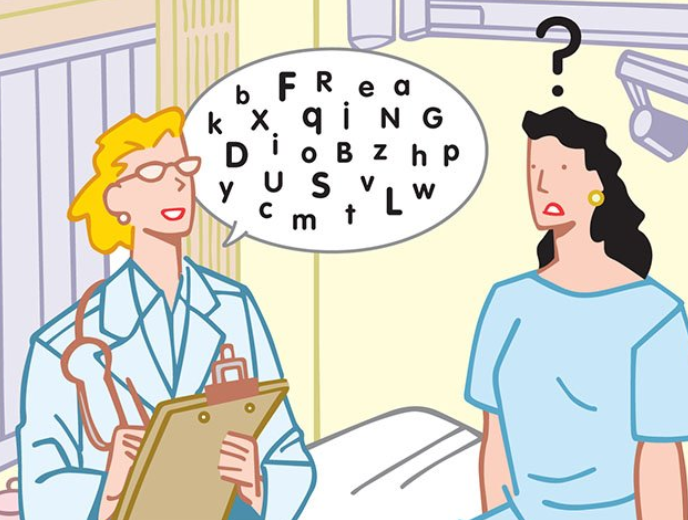
Martin Luther King Jr. once said that “of all the forms of inequality, injustice in health care is the most shocking and inhumane.” Though our current healthcare system has made huge leaps in improving care for people from many different backgrounds, the system still fails patients who don't speak English. Volunteering at Washington Hospital, I've watched immigrant families struggle to navigate hallways, fill out forms, and communicate with staff simply because English isn't their first language. For the 26 million Americans with limited English proficiency (LEP), the lack of infrastructure that the American healthcare system has to support these people is a systemic barrier that worsens the care they receive.
How This Affects Clinical Trials
This issue extends beyond the clinic. It follows patients into clinical trials, where the consequences can be even more serious. Dr. Edward Garon, a physician-scientist at UCLA, once identified an ideal patient for his lung cancer trial through a colleague. However, since the patient spoke only Spanish, Garon was forced to translate all of the trial documents by himself. Not only was this process costly and time-consuming, but it was also entirely his responsibility to fund. It took Garon so much effort to enroll just one participant with LEP. However, clinical trials routinely enroll hundreds or thousands of participants, showing why many of these trials do not properly enroll these groups. When the financial burden of translation falls on individual researchers, most simply don't pursue LEP patients at all. In fact, according to a 2021 study published in PLoS Medicine, only 2.71% of all clinical trials made any accommodation for non-English speakers.
Why is This Issue Persisting?
Clinical trials require informed consent, meaning patients must fully understand what they are agreeing to before participating. Translation must be exact and legally sound, and cannot be roughly approximated. A 2023 study published in Natureanalyzed over 12,000 consent events at a major cancer center and found that LEP patients were much less likely to enroll in non-industry trials than in industry-sponsored ones. This is because in industry trials, the sponsoring company covers translation costs. In non-industry trials, the principal investigator pays out of pocket. That financial burden discourages researchers from recruiting LEP patients in the first place. The fix, as the UCLA research team concluded, is for institutions and sponsors to absorb these costs so individual investigators don't have to choose between their budget and their patients. Policy conversations are beginning to shift toward centralized translation funding, and a growing number of research institutions are piloting programs to make consent documents available in multiple languages from the start. But this progress must occur faster. For the millions of LEP patients who could benefit from clinical research today, change must be made to better include them as soon as possible.
Sources
- Muthukumar, Akila V., et al. “Evaluating the Frequency of English Language Requirements in Clinical Trial Eligibility Criteria: A Systematic Analysis Using ClinicalTrials.gov.” PLoS Medicine, vol. 18, no. 9, Sept. 2021, https://pmc.ncbi.nlm.nih.gov/articles/PMC8439488/.
- Pérez Ortega, Rodrigo. “Non-English Speakers Are Being Shut Out of Clinical Trials.” Science, 2 Aug. 2023, https://www.science.org/content/article/non-english-speakers-are-being-shut-out-clinical-trials.
- Velez, M. A., et al. “Consent Document Translation Expense Hinders Inclusive Clinical Trial Enrolment.” Nature, vol. 620, 2 Aug. 2023, pp. 855–862, https://www.nature.com/articles/s41586-023-06382-0.
- Neira, Lissa. “The Importance of Addressing Language Barriers in the US Health System.” Duke Center for Personalized Health Care, 17 July 2018, https://personalizedhealth.duke.edu/blog/importance-addressing-language-barriers-us-health-system.